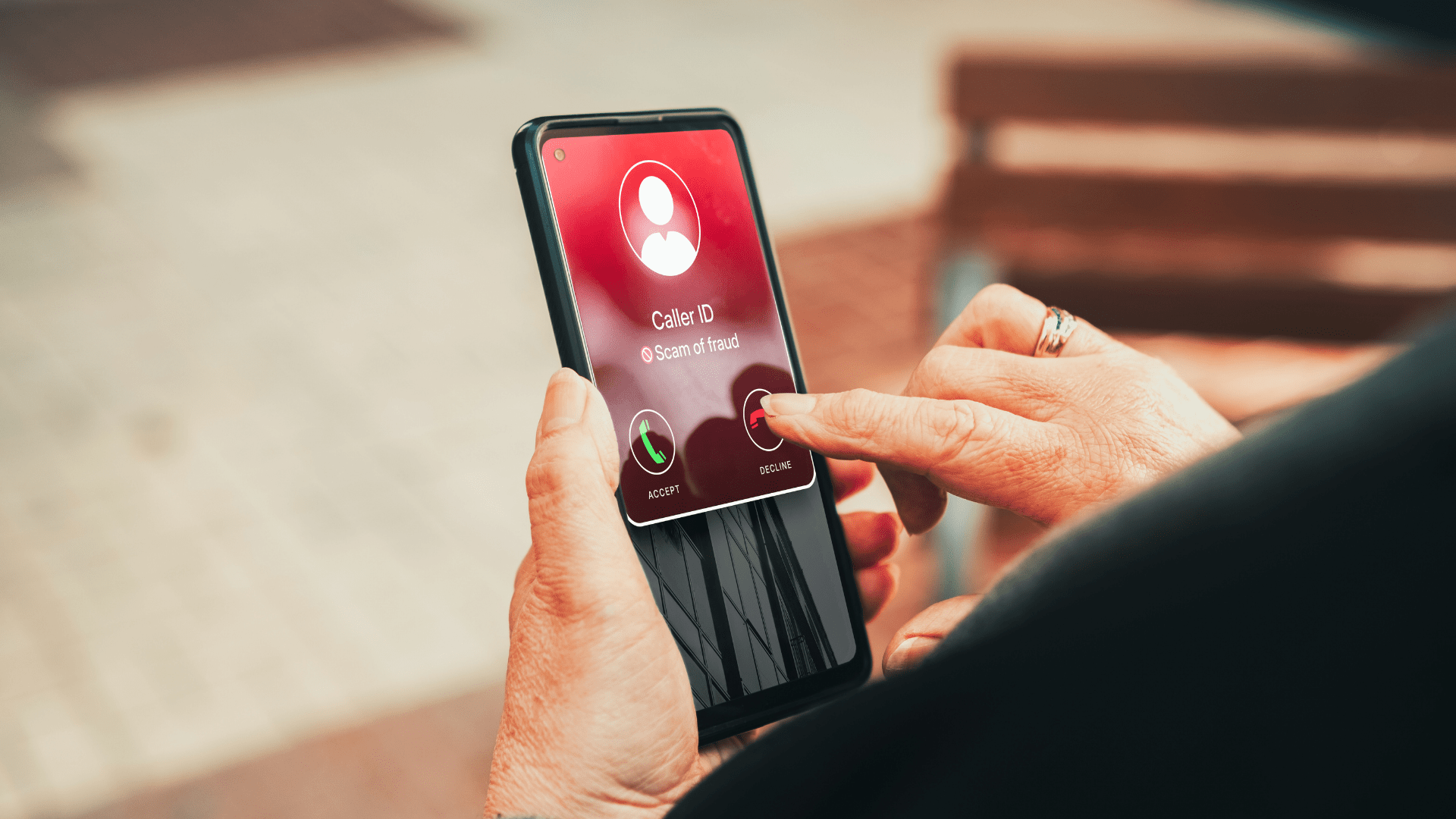
In 2024, older adults reported losing more than $2.4 billion to scams. Just four years earlier, in 2020, that number was $600 million. That’s roughly a fourfold jump in losses, according to the U.S. Federal Trade Commission — and it tells you everything about how aggressive and convincing these schemes have become.
Here’s the good news: as clever as scammers are, most of their tricks follow the same handful of patterns. Once you know what those patterns look like, they get a lot easier to spot. Below are five of the most common scams aimed at older adults today, along with the red flags that give each one away.
1. Government Impersonation Scams
These callers claim to be from a government agency — but the only crime being committed is theirs. In 2024, the most common version involved someone pretending to be from the Social Security Administration. Scammers count on the fact that anyone relying on government benefits for monthly expenses may feel pressured into cooperating with an “official.”
Watch for:
- Threats to cut off your benefits if you don’t act
- Demands for payment to handle routine services you’re actually entitled to receive for free
- Requests to “verify” information the government already has, like your Social Security number or mailing address
- Calls claiming your information is being used to commit crimes
- Demands for immediate payment by gift card or wire transfer
The simple truth: No federal agency will ever call, text, or email asking for information it already has — and none of them will ever ask you to pay with a gift card or wire transfer.
2. Other Impostor Scams
This is the broader family of “I’m someone I’m not” scams. The caller might claim to be a well-known company like Amazon, FedEx, or Netflix, a bank like Bank of America, or — most heartbreakingly — your own grandchild in trouble. Every version is engineered to make you act on emotion before logic catches up.
Watch for:
- A call, text, or email with a link claiming your account shows “suspicious activity”
- Requests for your password to “restore” your account (that’s exactly how they break in)
- A “grandchild in danger” story, often delivered by someone posing as police or a hospital — sometimes using AI to mimic your grandchild’s actual voice
- Heavy pressure to act immediately
- Requests to pay by wire transfer, a cash app like Venmo, or cryptocurrency
- An effort to keep you on the phone until the money has been sent
The simple truth: Hang up and call the real company, bank, or family member back on a number you look up yourself.
3. Investment Scams
Many older adults have spent a lifetime building their savings — which is exactly why scammers target it. In 2024, older adults lost more money to investment scams than to any other type, according to the FTC.
Watch for:
- Someone who finds you on social media and uses flattery to build trust
- Promises of a “proven” track record with guaranteed high returns
- Pitches built around hard-to-understand markets like cryptocurrency or real estate
- Glowing testimonials from “real people”
- Exclusive, limited-time offers designed to rush you
- A slick website or app showing growing profits to lure you into depositing more
- Fees required just to access “your” money
- Pressure to invest large sums, sometimes your entire 401(k)
The simple truth: A real investment doesn’t require secrecy, speed, or a fee to get your own money out. Ask whether the product is registered with the SEC, and run it past your own attorney or advisor first.
4. Romance Scams
Romance scams exploit something far more valuable than money: trust and connection. An AARP national survey in November 2025 found that one in six adults said they or someone they knew had lost money to one. People who are widowed, divorced, living far from family, or otherwise isolated can be especially at risk.
Watch for:
- A new connection who conveniently lives, works, or travels too far away to meet
- A barely-there social media profile
- A quick push to move from social media to a private app like WhatsApp
- Constant texting and fast declarations of love
- Video calls or visits that always fall through at the last minute
- A sudden, urgent request for a large sum — surgery, a plane ticket, even a “wedding”
- Requests for hard-to-trace payment like gift cards, crypto, or wire transfers
- Pet names like “sweetheart” or “honey” used in place of your actual name
The simple truth: Never send money to someone you’ve only met online or by phone — no matter how real the relationship feels.
5. Tech Support Scams
A pop-up suddenly fills your screen warning that your computer is at risk. Is it real, or a trap? In 2024, tech support scams cost older Americans $159 million in reported losses — and older adults were five times more likely than younger people to lose money this way.
Watch for:
- A pop-up claiming you have a virus and urging you to call a number for help
- A request to access your computer remotely to “fix” it (this often installs malware instead)
- Claims of being from Apple, Microsoft, McAfee, Norton, or another trusted name
- A warning that your security software has “expired” and needs replacing
- Insistence on immediate access, paired with threats that you’ll lose all your data
The simple truth: A legitimate tech company won’t ambush you with a pop-up and a phone number. Shut the computer down and walk away.
The Threads That Tie Every Scam Together
Notice how often the same tactics show up: urgency (“act now”), secrecy (“don’t tell anyone”), unusual payment (gift cards, crypto, wire transfers), and isolation (keeping you on the line or away from people who’d talk you down).
When you spot those signals, you don’t need to figure out which scam it is. You just need to do one thing: pause. Hang up, step away, and check with a trusted person or an official number before you act. That single pause is the most powerful protection you have.